





Bwine F7GB2 Pro Drone Review: 4K Camera, 75-Min Flight

Bwine F7GB2 Pro Drones: An Expert’s Comprehensive Review
Introduction: Unpacking the Bwine F7GB2 Pro Drone for Experts
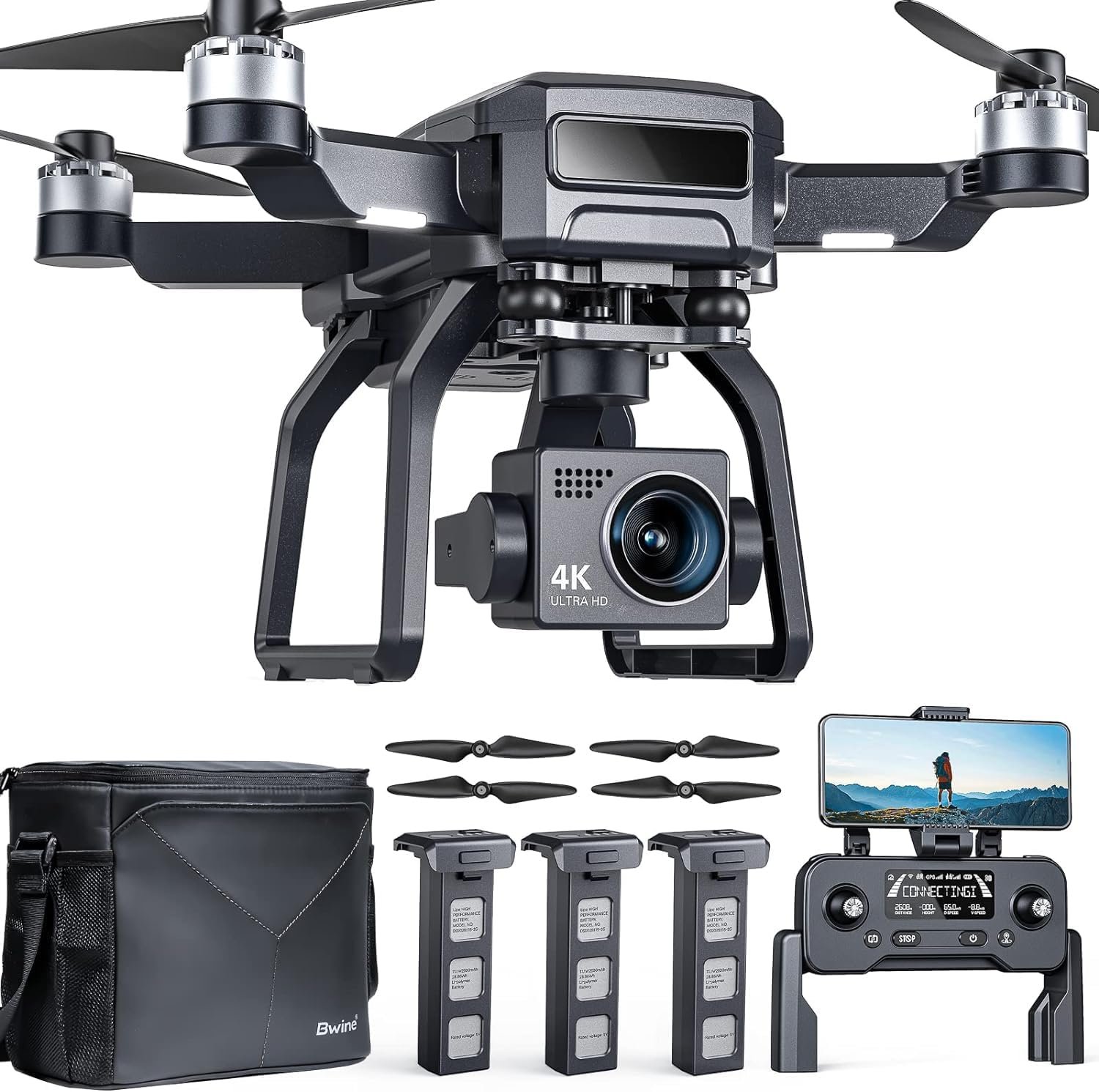
The drone market, while often dominated by a few major players, continues to see innovative entrants offering compelling alternatives. Among these, the Bwine F7GB2 Pro Drones have emerged as a notable option, aiming to bridge the gap between enthusiast-grade accessibility and professional-level functionality. Designed with a distinct aesthetic that some describe as reminiscent of a “space probe” or “secure armor,” the F7GB2 presents itself as a robust tool for aerial operations. Our objective in this comprehensive review is to critically examine the F7GB2 Pro’s capabilities, scrutinizing its core flight performance, integrated camera system, and operational nuances to ascertain its strategic positioning for the discerning professional.
While often marketed as a beginner-friendly drone due to its ease of setup and intelligent flight modes, the F7GB2 Pro also boasts features that warrant closer inspection by experienced pilots and professionals. We will delve into its technical specifications, evaluate its real-world performance against advertised metrics, and discuss its suitability for various applications where reliability and image quality are paramount. Our analysis will be grounded in current data, providing an informed perspective on whether the Bwine F7GB2 Pro Drones can meet the rigorous demands of professional use cases.
Core Flight Performance and Safety Systems
The foundation of any professional drone lies in its flight stability, endurance, and robust safety mechanisms. The Bwine F7GB2 Pro Drones offer a suite of features intended to deliver a reliable flying experience, even under challenging conditions.
Flight Dynamics and Endurance
The F7GB2 Pro is equipped with 1806 brushless motors, contributing to its ability to handle up to Level 6 wind resistance. This level of wind resistance suggests a capacity for stable flight in moderate breezes, an important consideration for outdoor aerial work. The drone’s physical specifications include a weight of approximately 550g (19.40 oz), which, while not ultra-light, is noted to help it stay grounded in windy conditions. Its foldable arm design aids in portability, making it somewhat compact for transport despite its robust build.
When it comes to flight duration, the F7GB2 Pro is advertised with a significant 75 minutes of total flight time when utilizing three 2600mAh intelligent batteries. Each individual battery provides approximately 25 minutes of flight time under ideal, windless conditions. However, real-world testing has indicated that a single battery might yield closer to 15 minutes of flight in warm temperatures and low wind before the Return to Home (RTH) function is automatically initiated. This discrepancy between advertised and practical flight times is a critical factor for professionals planning extended operations, suggesting that multiple batteries are essential for any substantial work.
The drone features an impressive control range, extending up to 3000 meters (approximately 9800-10000 feet). The video transmission range is also substantial, reaching up to 9842 feet (3km) in open, interference-free environments. This extended range provides ample operational flexibility for capturing expansive aerial perspectives.
Navigation and Safety Protocols
The Bwine F7GB2 Pro Drones integrate several intelligent flight and safety features crucial for professional applications:
- GPS Positioning: The drone utilizes GPS to maintain its position, offering precise hovering and contributing to accurate Return to Home functionality. This is fundamental for consistent shot framing and safe operations.
- Return to Home (RTH): A key safety feature, RTH is automatically triggered in scenarios such as low battery, loss of signal, or when manually activated by the pilot. The drone will adjust its heading and return to its take-off point, mitigating the risk of loss. Pilots can also set the RTH altitude via the Bwine Drone app to ensure the drone clears obstacles during its return path.
- Intelligent Flight Modes: The F7GB2 Pro includes several intelligent flight modes that enhance operational versatility:
- GPS Follow: The drone can track the user’s movement, maintaining a stable distance. While generally functional, some reviews note that the subject may not always remain perfectly centered.
- Flying Around (Orbit): This mode allows the drone to orbit a designated point of interest.
- Route Planning (Waypoints): Users can map out a specific flight path within the Bwine Drone app for the drone to follow autonomously.
- Image Follow and Gesture Photography: These features allow the drone to lock onto a marked subject for tracking and enable photo capture via hand gestures, simplifying operations for solo creators.
- Built-in Remote ID: For compliance with regulatory guidelines, particularly in regions like the US, the F7GB2 Pro comes with a built-in Remote ID module. This eliminates the need for external, often costly, add-ons and simplifies the FAA registration process for drones weighing 250g or more.
Despite these advanced features, a notable absence for professional-grade operations is a dedicated obstacle avoidance system. While the RTH function helps prevent loss, the lack of real-time collision avoidance sensors means pilots must exercise extreme caution, especially when utilizing automated flight modes or flying in complex environments. This limitation necessitates meticulous pre-flight planning and visual line-of-sight adherence to prevent incidents.
Critical Analysis of the Integrated 4K Camera System
For professionals, the camera system is often the most critical component of a drone. The Bwine F7GB2 Pro Drones feature a 4K camera mounted on a 3-axis mechanical gimbal, promising stable and high-resolution aerial imaging.
Camera Specifications and Performance
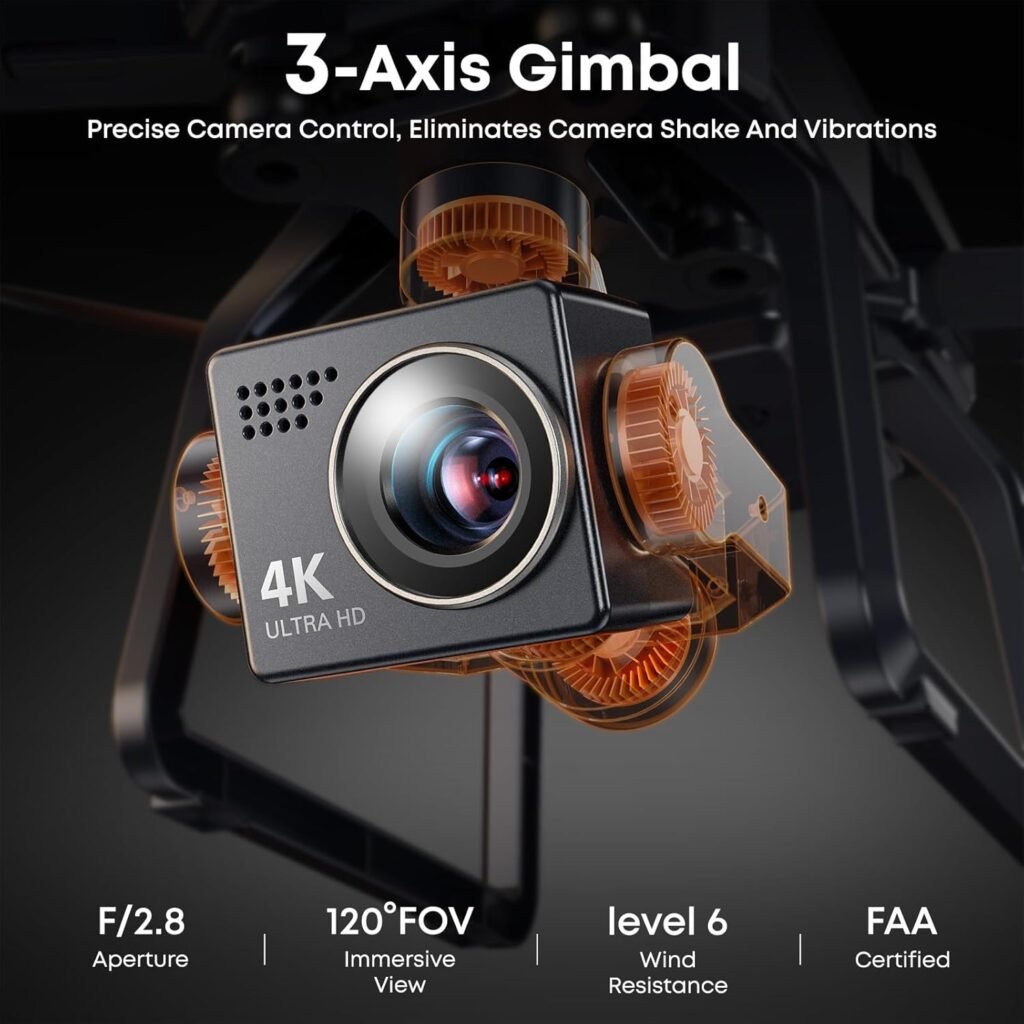
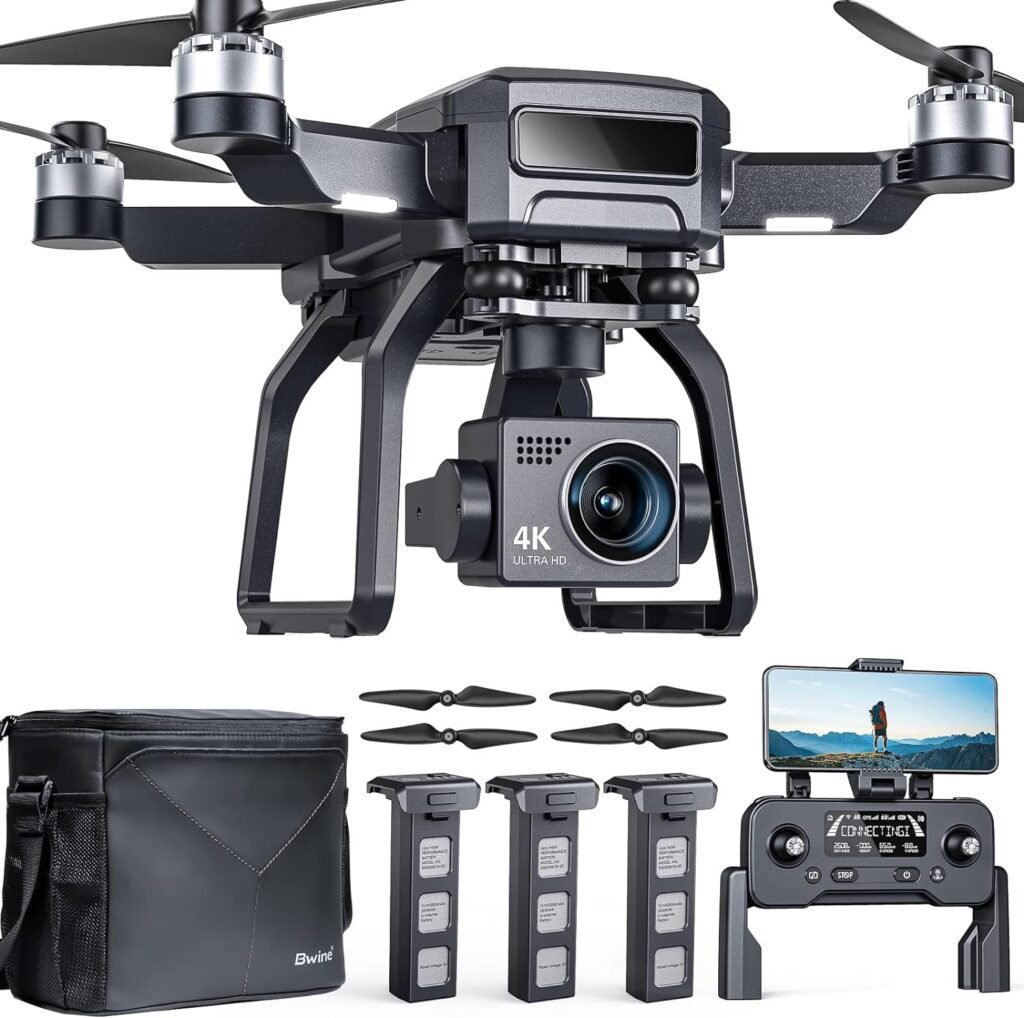
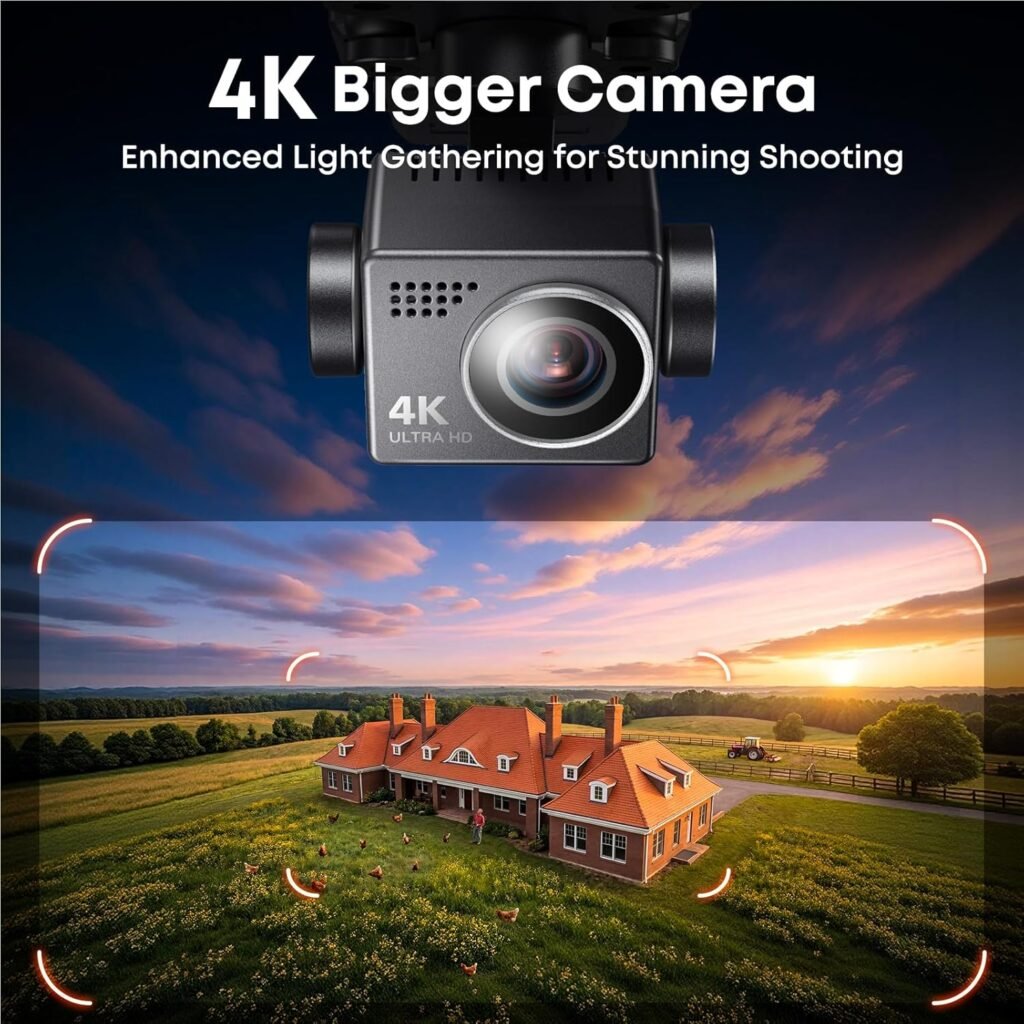
The F7GB2 Pro is equipped with a 4K (3840×2160) resolution camera, boasting 8.7 million pixels and a 90°/120° FOV adjustable wide-angle lens. This configuration is designed to capture more detail and realistic colors. A larger CMOS sensor is also mentioned, aimed at enhancing aerial photography, particularly for night scenes. The camera supports 5x digital zoom.
The inclusion of a 3-axis mechanical gimbal is a significant feature, directly addressing the common issue of shaky footage found in drones relying solely on Electronic Image Stabilization (EIS). This gimbal is designed to provide smooth, shake-free video even in windy conditions, a claim supported by some user experiences. The camera is also detachable with a one-click mechanism.
However, a critical point of contention for professional users is the frame rate at 4K resolution. The F7GB2 Pro records 4K video at a limited 15 frames per second (fps). This low frame rate can result in choppy footage, making it unsuitable for cinematic or broadcast-quality productions where a minimum of 24, 25, or 30fps is typically required for smooth motion. For smoother video, the drone offers 2.7K resolution at 30fps.
Image Quality and Post-Processing Limitations
Reviews indicate that while the 4K resolution is technically present, the overall image quality may be compromised by heavy processing, leading to a loss of fine detail, oversaturation, and an overly warm white balance. Photos are captured in JPEG format, which offers limited latitude for post-processing adjustments compared to RAW formats preferred by professional photographers.
For basic aerial photography and video, the image quality might be sufficient for beginners or casual users. However, for advanced image capture, professional photography, or videography requiring high fidelity and flexibility in post-production, the Bwine F7GB2 Pro Drones fall short of expectations.
Operational Considerations and Real-World Applications
Beyond specifications, the practical aspects of operating the Bwine F7GB2 Pro Drones are crucial for expert assessment. This includes setup, control, software integration, and its viability across various professional use cases.
Setup, Control, and App Integration
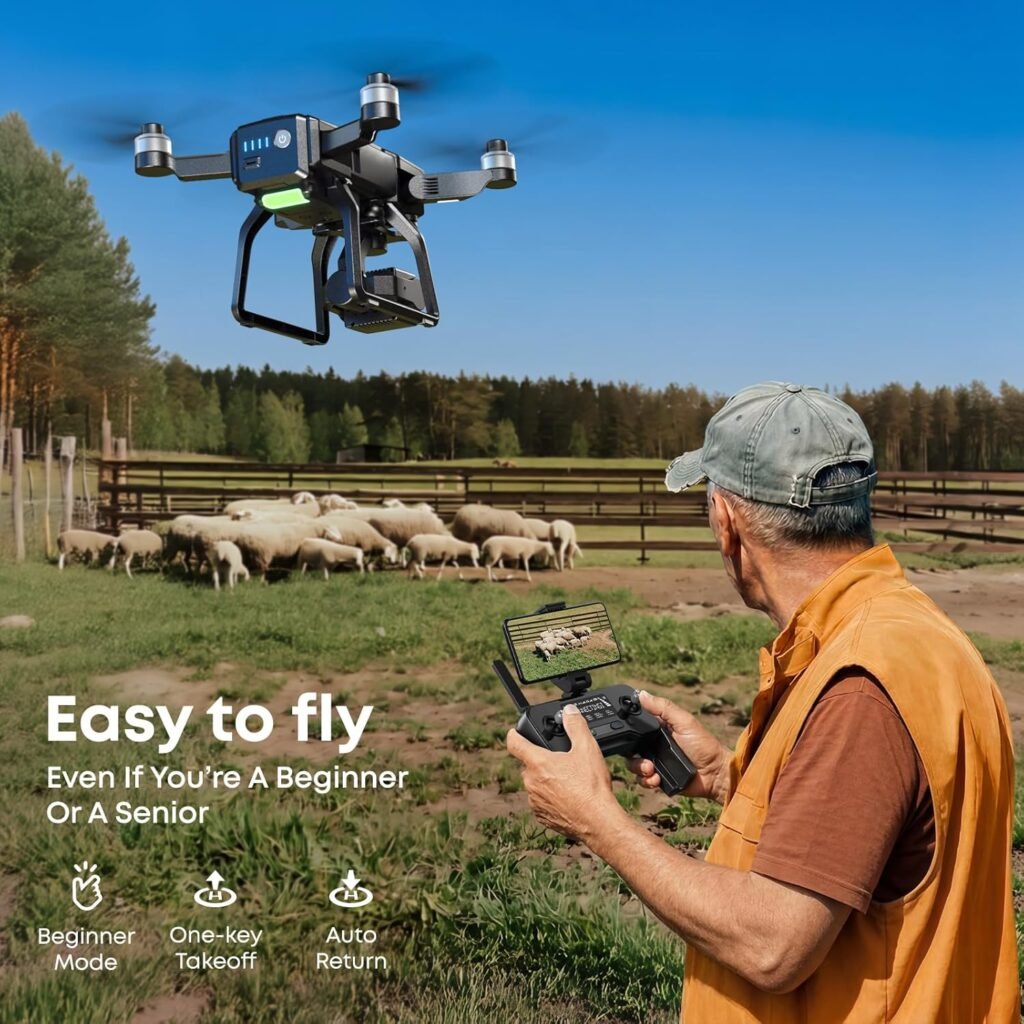
The setup process for the F7GB2 Pro is generally described as quick and easy, often taking less than ten minutes for the first flight. The drone connects wirelessly to a smartphone via Wi-Fi for control and live FPV feed, eliminating the need for cables between the remote controller and the phone.
The remote controller features a basic screen for telemetry data, while the Bwine Drone app handles the primary interface for live video, settings adjustments, and intelligent features. The app supports Android 6.0 or higher and iOS 10.0 or higher. Users can share FPV views directly to social media platforms via the app and can also retouch photos and videos with built-in filters and background music.
However, some expert reviews highlight a detectable lag between the controller and the drone, leading to less precise and smooth controls. This input lag can manifest as jerky video footage, even with the 3-axis gimbal, and makes subtle camera work challenging. The reliance on Wi-Fi for phone connection also means that live feed quality and range are dependent on the strength of this connection, and using the phone in airplane mode (to avoid interference) can render map features useless due to the lack of mobile data.
Battery Management and Charging
While the total flight time with multiple batteries is advertised as generous, the charging time for individual batteries is slow, taking approximately 1.5 hours per battery. Some reports suggest even longer charging times, up to six hours for batteries, and the remote controller also takes about two hours to charge. Given that only one USB-A to USB-C charging cable is typically included, acquiring additional cables is recommended for efficient multi-battery management. The intelligent batteries have passed UL 2054 safety testing.
Suitability for Professional Applications
The Bwine F7GB2 Pro Drones are often positioned as suitable for a wide range of applications, including professional photographers and aspiring videographers. Its features, such as the 3-axis gimbal, 4K camera (albeit with frame rate limitations), and intelligent flight modes, suggest potential for certain professional tasks.
However, based on our critical analysis, its limitations must be weighed carefully:
- Real Estate Photography/Videography: Could be used for basic exterior shots where movement is slow and smooth cinematic transitions are not the primary requirement. The 4K/15fps limitation would be a significant drawback for high-end video tours.
- Inspections (e.g., roof, basic structural): The drone’s stability and range might make it suitable for visual inspections where high-resolution stills are prioritized and close-proximity obstacle avoidance is not critical. However, the lack of collision avoidance would necessitate a clear flight path.
- Event Coverage (outdoor, static shots): For capturing static or slow-moving aerial shots of outdoor events, it could be functional. Dynamic, fast-paced event videography would be hindered by the 15fps 4K and control latency.
- Mapping/Surveying: The absence of precise control, advanced mapping software integration, and a high-quality camera for photogrammetry makes it unsuitable for professional mapping or surveying applications.
- Search and Rescue: While GPS and long range are beneficial, the lack of advanced thermal imaging options, high-speed responsiveness, and robust obstacle avoidance would limit its effectiveness in critical SAR missions.
In essence, while the F7GB2 Pro offers an attractive entry point with some advanced features, its performance characteristics, particularly in camera frame rate, image processing, and control precision, position it more as an advanced beginner or prosumer drone rather than a primary tool for demanding professional operations. Its robust build and decent flight stability are positives, but the camera’s video limitations and absence of obstacle avoidance are significant considerations for experts.
Frequently Asked Questions (FAQ)

To further clarify common inquiries regarding the Bwine F7GB2 Pro Drones, we address several expert-level questions:
Q: What is the actual usable flight time per battery for the Bwine F7GB2 Pro? A: While advertised at 25 minutes per battery, real-world flight tests often show approximately 15-16 minutes of usable flight time before the Return to Home (RTH) function initiates due to low battery. Professionals should plan for a shorter flight duration per battery and carry multiple spares.
Q: Does the Bwine F7GB2 Pro support RAW photo capture? A: No, the drone captures photos only in JPEG format. This limits the dynamic range and flexibility for post-processing adjustments that professional photographers typically require.
Q: Is there an obstacle avoidance system on the Bwine F7GB2 Pro? A: The Bwine F7GB2 Pro does not feature a dedicated obstacle avoidance system. While it has GPS and intelligent flight modes, pilots must manually ensure clear flight paths, especially when using automated functions, to prevent collisions.
Q: What are the limitations of the 4K video recording on the F7GB2 Pro? A: The drone records 4K (3840×2160) video at a frame rate of only 15 frames per second (fps). This low frame rate results in noticeably choppy footage, making it unsuitable for professional cinematic or smooth video applications. For smoother video, 2.7K at 30fps is available.
Q: How does the Bwine F7GB2 Pro’s control responsiveness compare to higher-end professional drones? A: Expert reviews indicate a detectable lag between the controller and the drone, leading to less precise and smooth controls compared to premium professional drones. This can impact the ability to perform subtle and precise maneuvers required for complex aerial cinematography or inspections.
Q: Is the Bwine F7GB2 Pro FAA Remote ID compliant? A: Yes, the Bwine F7GB2 Pro Drones are equipped with a built-in Remote ID module, making them compliant with FAA regulations for drones weighing 250g or more. The Remote ID details can typically be found via a QR code sticker on the device or within the Bwine Drone app after connection.
Conclusion: Strategic Positioning for the Discerning Professional
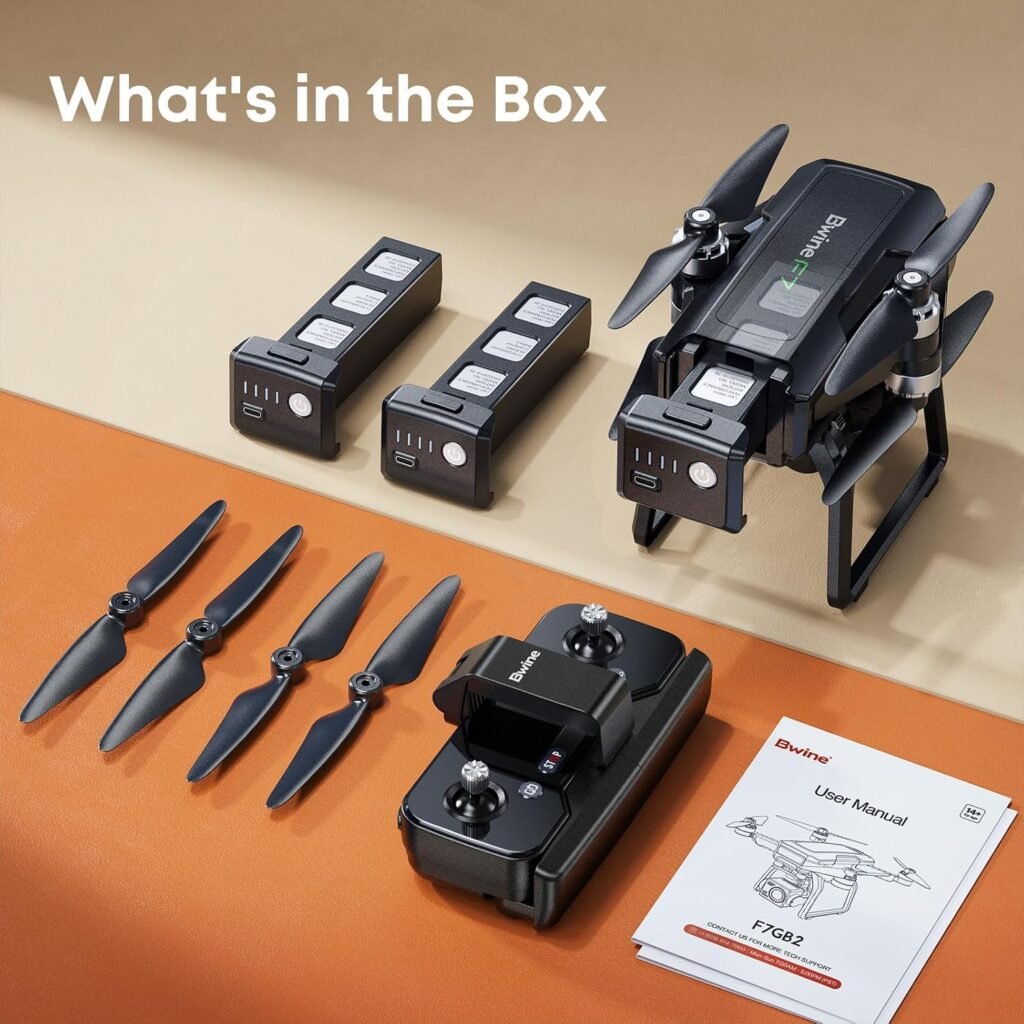
The Bwine F7GB2 Pro Drones represent an intriguing option in the competitive drone market, particularly for those seeking a feature-rich platform at a more accessible price point. From an expert perspective, we find its strengths lie in its robust build quality, admirable Level 6 wind resistance, and the inclusion of a 3-axis mechanical gimbal for improved video stability. The extended control and transmission range, coupled with intelligent GPS-based flight modes like Return to Home, Follow Me, and Waypoint Navigation, provide a solid foundation for controlled aerial operations. The built-in FAA Remote ID compliance is also a significant advantage, simplifying regulatory adherence.
However, our critical analysis reveals several limitations that position the F7GB2 Pro more appropriately as an advanced enthusiast or prosumer tool rather than a primary workhorse for high-demand professional applications. The most significant constraint is the 4K video recording at a mere 15 frames per second, which produces choppy footage unsuitable for cinematic quality. Furthermore, the lack of dedicated obstacle avoidance sensors necessitates heightened pilot vigilance, especially in complex environments or during automated flights. The observed control latency and reliance on JPEG-only photography further restrict its utility for precision tasks and post-production flexibility. Finally, the discrepancy between advertised and real-world battery life, coupled with slow charging times, demands meticulous power management for any professional workflow.
For professionals who require a secondary, cost-effective drone for basic aerial reconnaissance, stable but non-cinematic video capture, or photography where extensive post-processing is not required, the F7GB2 Pro could be a viable consideration. Its ease of use and inherent stability make it a good learning platform for aspiring professionals transitioning from consumer drones. However, for those whose work hinges on uncompromising video frame rates, precise controls, advanced safety features like omnidirectional obstacle avoidance, and RAW image capabilities, investing in higher-tier professional drones remains imperative. The Bwine F7GB2 Pro Drones offer a glimpse into advanced features at a competitive price, but they do not yet fully meet the rigorous and comprehensive demands of the truly discerning professional. Get ready to capture stunning aerial shots with this 4K camera drone. Perfect for beginners and pros alike!