
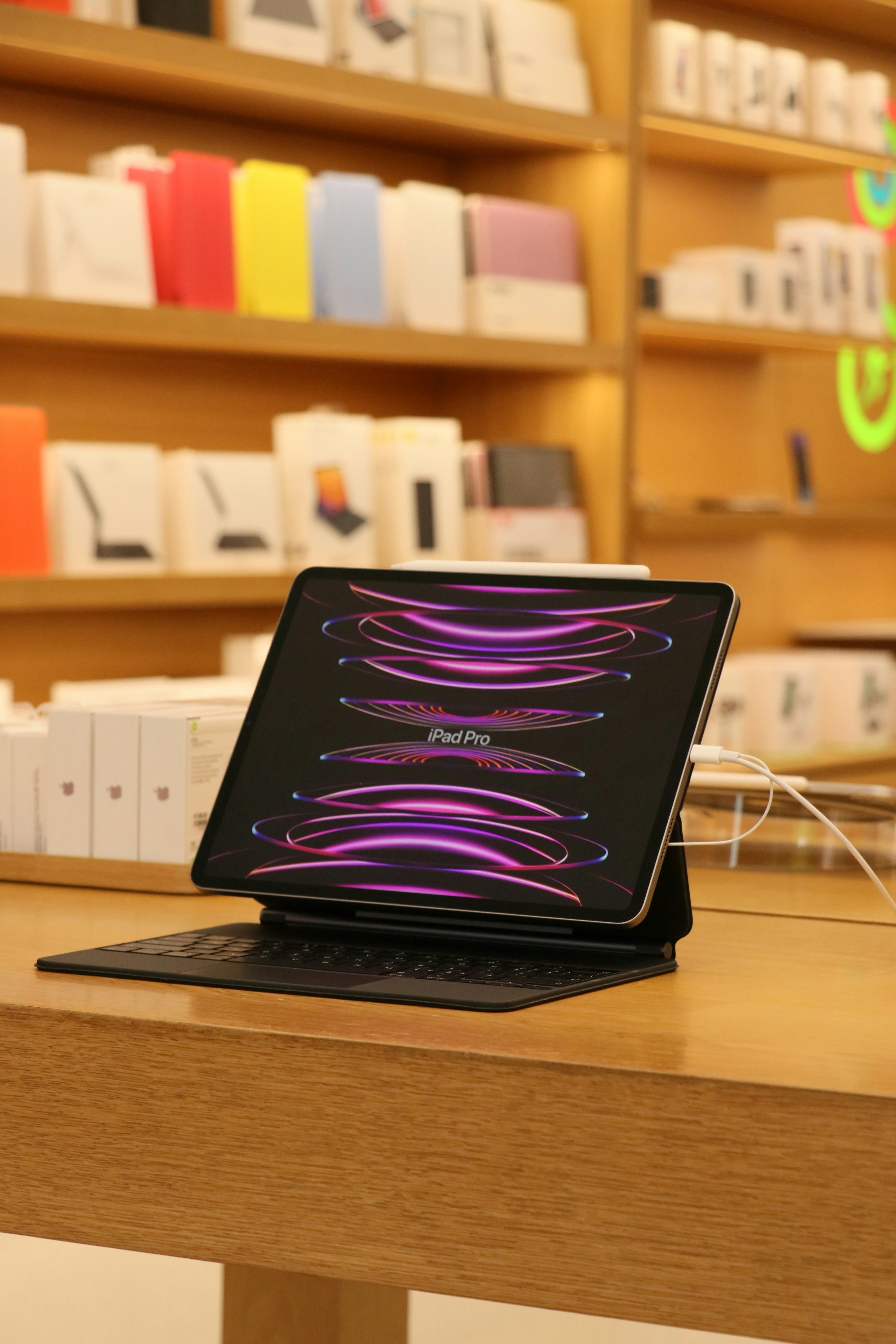
Introduction to the iPad Pro Series
The iPad Pro series, developed by Apple, has fundamentally transformed the landscape of tablet computing since its initial launch in 2015. The introduction of the iPad Pro distinguished itself from previous models by incorporating a larger display, professional-grade features, and powerful hardware, all aimed at creators and professionals. Over the years, the iPad Pro has evolved significantly, with each new iteration bringing enhancements that underline Apple’s commitment to innovation.
Early models, such as the original iPad Pro, set a high standard with features like the Apple Pencil and Smart Keyboard, which allowed for an unparalleled level of productivity. Subsequent models, including the M1 version released in 2021, showcased the integration of advanced M-series chips that enhanced performance while optimizing battery life. This marked a paradigm shift in how tablets could be used, aligning more closely with traditional computing devices.
The M4 and M5 iPad Pro models represent the latest chapter in this evolution. The M4, known for its powerful features and functionality, was well-received and set a high benchmark within the series. However, the M5 has taken significant strides forward, incorporating advancements in technology and performance. These iterations not only reflect Apple’s dedication to improving user experience but also highlight the growing demand for versatile computing devices that can seamlessly handle professional tasks.
This comparison between the M4 and M5 iPad Pro models is crucial for understanding the progression of Apple’s tablet offerings. It serves as a testament to the ongoing innovation that characterizes the iPad Pro line, and elucidates how these models cater to users seeking both power and portability in their devices. As we explore these two versions, it becomes clear how they fit within the broader context of technological advancement in tablet computing.
Overview of the M4 iPad Pro
The M4 iPad Pro has emerged as a prominent player in the tablet market, showcasing a range of specifications and features designed to enhance user experience and performance. This device features a stunning Liquid Retina XDR display, available in both 11-inch and 12.9-inch sizes, allowing for immersive visuals whether for work, gaming, or content consumption. The screen offers a refresh rate of up to 120Hz, ensuring smooth scrolling and fluid motion, which is particularly beneficial for graphic-intensive tasks.
At the core of the M4 iPad Pro is the powerful M4 chip, an innovative processor that combines efficiency with performance. The M4 is built on advanced technology, allowing it to seamlessly run multiple applications at once while maintaining low power consumption. This results in remarkably long battery life, with up to 10 hours of usage on a full charge, making it ideal for professionals and casual users alike. The chip’s architecture supports high-performance tasks, such as video editing and 3D rendering, setting a new standard for tablet capabilities.
In terms of unique features, the M4 iPad Pro includes advanced machine learning capabilities, enhancing various applications’ responsiveness and intelligent performance. Additionally, it supports the second-generation Apple Pencil, which offers a natural writing and drawing experience, coupled with the Magic Keyboard for those seeking a more desktop-like setup. The device’s compatibility with 5G cellular technology ensures that users can enjoy uninterrupted connectivity, whether at home or on the go. Overall, the M4 iPad Pro represents a significant advancement in Apple’s tablet lineup, providing a balance of power, versatility, and user-friendliness that appeals to a wide demographic.
Introduction to the M5 iPad Pro
The M5 iPad Pro represents a significant advancement in Apple’s tablet lineup, building upon the foundation laid by the M4 model. One of the most notable features of the M5 is its enhanced performance. Equipped with the next-generation M5 chip, this tablet is designed to deliver faster processing speeds and improved graphics capabilities. The M5 chip boasts a higher number of cores, which not only allows for seamless multitasking but also elevates the overall user experience in resource-intensive applications, such as video editing and gaming.
A key enhancement in the M5 iPad Pro is the introduction of a mini-LED display technology. This advancement provides users with improved brightness and contrast ratios, resulting in vibrant colors and deeper blacks. The display also supports ProMotion technology, which offers a 120Hz refresh rate, thereby ensuring fluid motion during scrolling and animation. This feature is particularly beneficial for artists and graphic designers who seek precision and detail in their work.
Camera capabilities have also seen an upgrade in the M5 model. Apple has introduced a sophisticated camera system featuring improved sensors and optics. The rear camera now includes advanced computational photography features, which allow for enhanced low-light performance and greater dynamic range. Furthermore, the front-facing camera is equipped with Center Stage technology, ensuring that users remain in focus during video calls, effectively adapting to movements within the frame.
Incorporating these enhancements aligns with Apple’s design philosophy of continuous innovation and user-centric improvements. With advancements in performance, display technology, and camera functionality, the M5 iPad Pro stands as a testament to Apple’s commitment to providing cutting-edge technology and meeting users’ evolving needs.
Performance Comparison: M4 vs M5
The performance of the M4 and M5 iPad Pros represents a significant aspect addressing user needs in portable computing devices. Both models are engineered for high efficiency, but there are notable differences that merit discussion. The M4 chip, with its advanced architecture, delivers impressive processing capabilities that cater to multitasking and intensive applications. It integrates an 8-core CPU and a 10-core GPU, resulting in notable performance across various tasks, including creative workloads, gaming, and productivity applications.
On the other hand, the M5 chip enhances these capabilities with further refinements and optimizations, ensuring superior performance metrics. The M5 features an upgraded 10-core CPU and an improved 12-core GPU, which contributes to faster rendering times and higher frame rates in graphics-intensive applications. Benchmarks reveal that the M5 outperforms the M4 in most scenarios, particularly in tasks demanding high graphical fidelity. For instance, user tests indicated a performance increase of approximately 20% in rendering speeds when utilizing the M5 chip compared to its predecessor.
In terms of multitasking abilities, both the M4 and M5 facilitate seamless transitions between apps; however, the M5 tackles heavy workloads with even greater efficiency, reducing latency and improving application load times. Real-world usage feedback often underscores this advantage, particularly in contexts such as video editing, where the disparity in performance can significantly impact workflow. Furthermore, the M5 is designed to handle future software updates more robustly, ensuring longevity in performance as applications evolve and demand increased computing power. Overall, while both chips showcase remarkable capabilities, the M5 emerges as the more powerful option, setting a new standard for tablet performance.
Design and Build Quality: An Apple Signature
The design and build quality of the M4 and M5 iPad Pro models exemplify Apple’s commitment to premium aesthetics and durability. Both iterations showcase a sleek aluminum chassis, maintaining the premium touch that users have come to expect. The dimensions of the M4 and M5 models are strikingly similar, with both featuring a thickness of 6.4 mm. However, the M5 has introduced subtle refinements, contributing to a slightly lighter build. While the M4 weighs around 1.5 pounds, the M5 manages to shave off a few ounces, enhancing portability for professionals on the go.
When it comes to color options, Apple has maintained its classic Space Gray and Silver finishes, yet the M5 introduces a new shade, Starlight, adding a fresh perspective to the color palette. This diversification in colors allows users to express their individuality while adhering to the refined Apple aesthetic. The M5 iPad Pro also showcases enhanced tactile features, with a slightly textured back that offers improved grip and reduced fingerprints, making it more user-friendly during prolonged use.
In addressing accessory compatibility, Apple has ensured that both the M4 and M5 tablets work seamlessly with existing accessories such as the Magic Keyboard and Apple Pencil. This continuity not only preserves the investment made by users but also reinforces Apple’s ecosystem approach. Innovative accessories that enhance productivity, such as the new MagSafe technology introduced with the M5 model, further solidify Apple’s reputation for integrating design with functionality. Overall, the design elements of both the M4 and M5 iPads reflect Apple’s ethos of combining form and function, continually setting high benchmarks in the tablet market.
Display Technology: Enhancements and Differences
The display technology utilized in the M4 and M5 iPad Pro models marks a significant advancement in Apple’s flagship tablet series. This comparison focuses on various elements, including screen resolution, brightness levels, color accuracy, and refresh rates, all of which play a crucial role in enhancing user experience.
Starting with screen resolution, both the M4 and M5 models maintain the impressive Retina display characteristic of Apple’s design philosophy. However, the M5 iPad Pro boasts a slightly enhanced resolution, resulting in sharper images and finer text rendering. This increase in resolution is particularly beneficial for creative professionals engaged in graphic design and video editing, where detail is paramount.
Brightness levels have also seen an upgrade from the M4 to the M5 model. The M5 iPad Pro features higher peak brightness, which allows for better visibility under diverse lighting conditions, especially in brightly lit environments. This improvement ensures that users experience improved clarity while viewing images or engaging in outdoor tasks.
Color accuracy is another critical aspect of display technology. Apple has made strides in enhancing color fidelity in the M5 iPad Pro, enabling it to display a broader color gamut and more accurate hues. For artists and photographers, this advancement is significant, as it allows for a more precise representation of their works. With the M4 model, while color quality is commendable, the M5’s enhancements offer a more immersive and authentic viewing experience.
Lastly, the refresh rates in both models cater to different user needs. The M5 iPad Pro supports adaptive refresh rates, allowing for smoother scrolling and an enhanced gaming experience. This feature is instrumental for casual users who benefit from a more responsive interface while enjoying high-definition entertainment or gaming experiences.
Overall, the advancements in display technology from the M4 to the M5 iPad Pro provide tangible benefits for both creative professionals and everyday users. These enhancements not only elevate visual output but also contribute significantly to user satisfaction and engagement.
Camera and Audio Innovations
The advancements in camera and audio systems in the M5 iPad Pro represent a significant leap over its predecessor, the M4. Apple has integrated cutting-edge technology that enhances photo and video capabilities, making this device a powerful tool for creatives and professionals alike. The M5 iPad Pro features an upgraded camera system that includes improved sensors, enabling greater detail and clarity in images. This enhanced sensor performance, combined with advanced computational photography algorithms, allows users to capture stunning photographs in various lighting conditions, further elevating mobile photography to new heights.
In addition to the hardware improvements, the M5 offers enhanced video recording capabilities. Users can now shoot in higher resolutions and frame rates, providing the flexibility needed for professional-grade videography. The incorporation of formats suitable for content creators, such as ProRes video, affirms Apple’s commitment to meeting the demands of filmmakers and video editors. Moreover, the introduction of features like cinematic mode offers dynamic focus options, adding a professional touch to videos that can be a game-changer for content creation on the go.
On the audio front, the M5 iPad Pro also sees notable upgrades. Apple has refined the audio hardware, featuring improved speakers that deliver a richer and more immersive sound experience. With surround sound capabilities and enhanced volume output, users can enjoy their media with superior audio quality, essential for both entertainment and professional applications. Additionally, software enhancements, such as improved microphone arrays, ensure clearer audio capture during voice recordings or video calls. These innovations collectively indicate that the M5 iPad Pro is not only a versatile device but also a sophisticated tool for photography, videography, and audio production, setting a new standard in the tablet market.
Battery Life and Charging: What Has Changed?
The battery performance of the iPad Pro has undergone significant improvements from the M4 to the M5 models. Apple claims that both the M4 and M5 iPad Pro models feature a similar battery capacity of 40.88 watt-hours, which allows for an impressive longevity of up to 10 hours of usage for both devices. However, what sets the M5 apart is its enhanced energy efficiency, enabled by the new architecture of the M5 chip, which optimizes power consumption during various tasks. This translates to better performance per watt, ultimately contributing to a more efficient daily usability.
Additions in the charging technologies also mark a distinct evolution in the M5 model. The M4 iPad Pro utilized a standard USB-C 20W charging adapter, which eventually allowed a full charge within a few hours. The M5 takes it a step further by being compatible with higher wattage adapters, supporting fast charging capabilities that can significantly reduce the time required to power up the device. When paired with a 30W or 61W charger, the M5 can charge to approximately 50% in about 30 minutes, a feature that is particularly beneficial for users on the go.
Furthermore, Apple has implemented smarter battery management in the M5 iPad Pro, which optimizes charging cycles based on user behavior and application usage. This explicit focus on adaptive energy management not only extends the lifespan of the battery but also helps in conserving power during idle times. Users may experience less battery drain when using apps that are less resource-intensive, making it an essential upgrade for professionals and creatives alike. Overall, the transition from the M4 to the M5 iPad Pro signifies noticeable advances in battery life and charging efficiency, ensuring an improved user experience.
User Experience and Software Enhancements
The user experience on the M4 and M5 iPad Pro models is significantly influenced by the advancements in iPadOS, Apple’s dedicated operating system for its tablet lineup. iPadOS has continually evolved to leverage the processing power and capabilities of each device, ensuring that users benefit from the latest technological innovations. With the launch of the M5 iPad Pro, several software enhancements have been introduced that capitalize on its superior hardware.
One of the key upgrades in iPadOS for the M5 iPad Pro is the improved multitasking experience. While the M4 iPad Pro already supported multitasking features, the M5’s capabilities, paired with iPadOS refinements, allow for smoother transitions and better management of multiple apps running concurrently. For instance, users can now efficiently slide between split-screen views and easily access the app library without disrupting their workflow, making it an ideal device for professionals and creatives alike.
Moreover, the M5 leverages enhanced graphics capabilities that make tasks like video editing and gaming more fluid and responsive. The software optimizations within iPadOS take full advantage of this hardware to deliver higher frame rates and improved rendering times. This is particularly beneficial for users who engage in creative tasks, as they can now edit videos and graphics with greater efficiency and precision.
Another notable feature within iPadOS is the enhanced support for Apple Pencil, which improves responsiveness and precision for drawing and note-taking. The M5 iPad Pro offers a more seamless experience, allowing users to feel more connected to their digital canvas, thanks to advanced latency reduction features. Combined with software enhancements in drawing applications, this not only elevates the user experience but also opens new avenues for creativity.
Overall, the M5 iPad Pro, integrated with the latest iPadOS, provides an enriched user experience that supports diverse tasks and workflows, demonstrating how software can significantly enhance the usability of advanced hardware.