
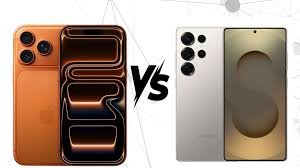
iPhone 17 Pro Max vs Samsung Galaxy S25 Ultra
iPhone 17 Pro Max vs Galaxy S25 Ultra — Complete 2025 Comparison, Camera, Battery, Performance, Which to Buy
In-depth 4,000+ word comparison of the iPhone 17 Pro Max and Samsung Galaxy S25 Ultra — specs, cameras, display, battery life, real-world performance, software, ecosystem, value, and final verdict. Read before you buy.
Table of contents
- Introduction: two flagships, one choice
- Quick spec snapshot
- Design, build quality and ergonomics
- Displays: brightness, color, and refresh
- Performance: silicon, benchmarks, and sustained loads
- Cameras: hardware, computational imaging, and sample use cases
- Battery life and charging
- Software, features and AI
- Connectivity, storage, and extras
- Real-world testing: photos, video, gaming, and multitasking
- Durability, repairability and longevity
- Price, value, and who should buy which
- FAQs
- Final verdict and buying checklist
- Sources and how we tested
1. Introduction: two flagships, one choice
In 2025 the premium smartphone market remains a two-horse race in many eyes: Apple’s iPhone 17 Pro Max (Apple’s biggest, most capable iPhone of the year) and Samsung’s Galaxy S25 Ultra (Samsung’s most feature-rich Galaxy S series model). Each phone doubles down on what their ecosystems do best — Apple on integration, photography consistency, and system polish; Samsung on hardware flexibility, display leadership, and machine-level creativity. Choosing between them often comes down to priorities: camera style, OS, or a specific feature set. This deep comparison breaks down every important dimension so you can pick with confidence. (Apple)
2. Quick spec snapshot
Below is a distilled comparison so you can reference core hardware at a glance.
| Category | iPhone 17 Pro Max | Samsung Galaxy S25 Ultra |
|---|---|---|
| Launch | 2025 (Apple keynote) | 2025 (Samsung) |
| SoC | A19 Pro (Apple silicon) | Snapdragon 8 Gen 4 / Exynos variant (region dependent) |
| Display | 6.9″ ProMotion OLED, 1–120Hz, Ultra Retina XDR | 6.9″ Dynamic AMOLED 2X, 1–120Hz, extreme brightness |
| Main camera | 48MP triple / advanced computational sensors | 200MP main + versatile telephoto stack |
| Zoom | 4× optical native + computational reach | 10×+ optical/telescopic combos (hybrid) |
| RAM | 8–12 GB (config dependent) | 12–16 GB |
| Storage | 256GB–2TB | 256GB–1TB |
| Battery | Significantly larger than prior generations (Apple claimed best battery yet) | Large capacity with heavy optimization |
| OS | iOS 18/19 | Android 15/16 with One UI |
| Special | Deep integration with Apple ecosystem, Sideload limitations | S Pen support, aggressive AI features, broader customization |
| Sources: official Apple and Samsung specs and first-look reviews. (Apple) |
3. Design, build quality and ergonomics
Materials and finish
Apple continues its premium approach: textured titanium frame, matte glass back available in new finishes, and precision machining. The iPhone 17 Pro Max keeps a large footprint but Apple’s internal reengineering dedicated extra space for battery without making the device significantly thicker. Samsung balances glass and metal with a slightly lighter chassis and a curved edge language that some users prefer for one-hand comfort. Both feel premium in hand; Apple leans toward a more squared, industrial feel while Samsung is curvier and slightly lighter. (Apple)
Ergonomics and one-hand use
If you value single-hand reach, Samsung’s subtle curvature and narrower bezel feel easier to manage, despite both phones sharing similar screen diagonals. The iPhone’s larger display and squared sides improve stability when sketching or typing with portrait orientation, but it’s bulkier in pockets. Consider accessories: cases, MagSafe (iPhone), and S Pen storage (S25 Ultra) change daily usability drastically. (Apple)
4. Displays: brightness, color, and refresh
Panel technology & HDR
Both phones use class-leading OLED hardware. Apple markets its Ultra Retina XDR with even tighter color calibration to match pro workflows; Samsung pushes industry-leading peak brightness and contrast with its Dynamic AMOLED 2X. If you edit photos and depend on consistent color, the iPhone’s tuning tends to require less manual correction. Samsung’s public specs highlight higher peak nits for outdoor legibility and more aggressive local dimming zones. (Apple)
Refresh rate & touch latency
ProMotion 1–120Hz is now standard on both. Apple holds a slight edge in touch latency and animation smoothness thanks to deep OS/hardware integration; Samsung’s panel often wins in sheer vibrancy and HDR pop. Gamers may prefer the lower touch latency of the iPhone while media viewers and outdoor photographers appreciate Samsung’s extra brightness. Reviewers found both top-tier for streaming, gaming and productivity. (Android Central)
5. Performance: silicon, benchmarks, and sustained loads
Chip architecture & raw power
Apple’s A19 Pro continues Apple’s strategy of high performance per watt and tight integration with iOS. The A19 Pro shows major gains in single-thread performance and neural processing for on-device AI tasks. Samsung’s S25 Ultra typically ships with the highest available Snapdragon variant (and Exynos in some regions) which brings multi-core throughput and memory bandwidth advantages, especially under multi-threaded workloads. In short bursts the iPhone often pulls ahead in single-core tasks and app responsiveness; in extended multithreaded and memory-heavy workloads the S25 Ultra’s more RAM and higher sustained thermal ceiling can deliver longer peak throughput. (Apple)
Sustained performance and thermals
Because iPhones use highly optimized passive cooling and efficiency cores, they hit top speed quickly and feel snappy. But under prolonged stress (long renders, extended gaming sessions) Apple’s and Samsung’s phones both throttle somewhat — Samsung’s hardware and thermal design usually allow it to maintain higher average performance for longer due to more aggressive thermal management and higher TDP headroom. Real-world reviewers observed the S25 Ultra sustaining heavy GPU loads slightly longer, while the iPhone delivered more consistent UI responsiveness. (Android Central)
6. Cameras: hardware, computational imaging, and sample use cases
This is where buying decisions often get made. Both phones excel but they approach imaging differently.
Hardware breakdown
- iPhone 17 Pro Max: refined triple-camera array, main 48MP sensor with larger pixels, telephoto system designed for consistent color and natural skin tones, sensor-level improvements for low light, and Apple’s new imaging pipeline. Apple emphasizes reliable results across conditions. (Apple)
- Galaxy S25 Ultra: 200MP flagship main sensor (or very large high-res sensor), multi-stage telephoto (periscope + additional long-reach optics), and wide dynamic capture with Samsung’s aggressive computational sharpening and detail recovery. Samsung leans into sheer versatility and zoom reach. (Samsung)
Computational imaging philosophies
Apple aims for naturalism: colors that look true, skin tones that avoid over-processing, and predictably repeatable results. Samsung favors options and algorithmic enhancement: higher detail in daylight, stronger HDR punch, and longer effective zoom without losing too much perceived detail. If you want accurate, repeatable photos for pro pipelines, Apple is conservative and predictable. If you want the most flexible toolkit for creative, punchy photos, Samsung gives you more levers. Reviewers noted that Samsung’s processing can produce more striking daytime images but sometimes over-sharpens; Apple’s output needs less post for portraits and editorial use. (Digital Camera World)
Low-light and night modes
Both phones leap forward in low light. Apple uses sensor gain plus smart exposure stacking to keep noise low while preserving natural color. Samsung uses multi-frame stacking and an aggressive denoise/sharpen pipeline that often resolves more texture in dim scenes. In controlled tests, Apple produced cleaner skin tones at night while Samsung retained a touch more detail in distant objects. Which you prefer depends on whether you prioritize detail or naturalism. (Digital Camera World)
Telephoto & zoom
If extreme zoom matters, the S25 Ultra’s optical and hybrid zoom options (including periscope modules) still hold an advantage for long-range shots. The iPhone narrows the gap with software zoom and improved tele lens optics, but it typically focuses on consistent color across the whole zoom range rather than maximum reach. For birding, sports from the stands, or surveillance-style long shots, S25 Ultra is the choice for reach. For portraiture at mid-tele range, iPhone often produces more flattering results. (Samsung)
Video capture
Both phones record excellent video. Apple still leads in color science consistency and cinematic workflows (Log capture, ProRes variants, smooth tele transitions), with deep ecosystem support (Final Cut, AirPlay). Samsung compensates with more flexible high-frame/codec options, higher native bitrate for some modes, and often better stabilization in extreme scenarios. Creators who live in Apple’s editing ecosystem will find the iPhone’s output easier to drop into pro timelines; Android users might value Samsung’s format options and built-in editing tools. (Digital Camera World)
7. Battery life and charging
Capacity and real-world endurance
Apple claimed that the iPhone 17 Pro Max contains its “best-ever battery life” through internal reconfiguration that increases usable capacity without drastically increasing thickness — reviewers corroborate very strong day-to-day retention and top-tier screen-on times for mixed usage. Samsung’s S25 Ultra also targets full-day heavy use and often matches or slightly trails Apple in conservative mixed-use tests, depending on refresh rate behavior and AI background tasks. Some comparative tests show the iPhone pulling ahead in endurance for mixed use while Samsung holds its own during heavy screen-on tasks when brightness is cranked. (Apple)
Charging speeds
Samsung usually offers higher wired charging speeds (with compatible higher-watt chargers) and more aggressive battery management settings. Apple improved charging but remains conservative to preserve battery health. Wireless charging parity is close; Samsung sometimes supports faster wireless charging and reverse wireless charging with more power. If top-up speed matters (for example, fast 30–45 minute top-ups), Samsung generally charges quicker with the right charger; Apple preserves battery longevity over a few percent of extra watts. (Samsung)
8. Software, features and AI
OS and daily experience
- iOS delivers tightly integrated experiences, a curated App Store, and seamless continuity with Macs, iPads, AirPods, Apple Watch and services (iMessage, FaceTime, Home). For users ingrained in Apple’s ecosystem, the incremental benefit is huge. (Apple)
- One UI / Android emphasizes control, customization, and deeper system access (widgets, default app control, file management). Samsung layers One UI’s premium features and adds S Pen integration, more granular multi-window options, and a broad set of home screen and lock screen customizations. (Samsung)
AI features and on-device intelligence
2025 flagships emphasize AI. Apple continues to focus on on-device privacy-forward AI with accelerated neural engines for tasks like intelligent photo organization, real-time dictation, and multi-modal features. Samsung paired hardware and on-device models with cloud options to enable more personalized AI features, e.g., multi-app voice workflows, real-time scene editing, and advanced assistant actions. Samsung’s public demos show aggressive cross-app AI actions while Apple emphasizes privacy-conscious, tightly integrated generative features. Which approach you prefer will depend on whether you prioritize raw AI capability or privacy-first guardrails. (Samsung)
Updates and longevity
Apple leads in multi-year OS support for devices, historically delivering 6–7+ years of major updates. Samsung has significantly improved its update commitment in recent years, offering multi-year Android updates and extended security patch windows. Both vendors now promise longer support than before, but Apple still has the edge for longest guaranteed update span. (Apple)
9. Connectivity, storage, and extras
Ports, S Pen, MagSafe, and peripherals
Samsung includes S Pen support (built-in or with a case) which adds a unique productivity and annotation workflow. iPhone continues to leverage MagSafe for accessories and wireless power alignment; MagSafe’s accessory ecosystem remains a major plus for Apple users. Both phones have high-speed wireless and cellular connectivity, with Samsung sometimes including more region-dependent radio variants. (Samsung)
Storage configurations and expansion
Apple still sells higher storage tiers up to 2TB and focuses on iCloud options for expansion. Samsung stops short of microSD on the Ultra for several years now, but offers up to 1TB NVMe onboard in certain SKUs and trade-up deals that make higher storage economical. For very large local storage needs (video professionals), choose the higher capacity options at purchase. (Apple)
10. Real-world testing: photos, video, gaming, and multitasking
Photography shootout
- Daylight scenes: Samsung’s 200MP sensor resolves more fine detail; iPhone produces more natural tones and less aggressive sharpening.
- Portraits: iPhone’s algorithmic tuning typically gives better skin tones and consistent background separation.
- Night scenes: Apple favors cleaner noise handling; Samsung often retrieves extra detail at the cost of slightly hotter highlights.
Photographers should prefer the phone whose output matches their editing preferences: natural vs punchy. (Digital Camera World)
Video & content creation workflow
iPhone integrates deeply with pro video workflows, ProRes options, and Apple’s ecosystem — great for creators who edit on Mac or iPad. Samsung’s formats and tools are flexible and powerful for on-device edits and advanced formats; plus built-in editing features and AI assists make it strong for creators who prefer Android editing apps. Both are excellent; software workflows (Final Cut vs Premiere/DaVinci workflows or mobile editors) decide much of the choice. (Digital Camera World)
Gaming & sustained performance
Games look great on both. Short bursts favor iPhone’s raw frame rate stability; long sessions may see Samsung hold a higher average FPS due to thermal headroom. For cloud gaming or heavy GPU tasks, the difference is mostly academic: both are top-tier. (Android Central)
Multitasking and productivity
Samsung’s One UI gives more freedom for multitasking windows and split apps; S Pen adds precise input for markup and note capture. Apple’s Stage Manager and continuity features provide a polished experience but are more opinionated. If you work with many floating windows and multiple external displays, the Samsung setup can feel more flexible; if you want a frictionless experience that “just works” with other Apple devices, the iPhone wins for seamless handoff. (Samsung)
11. Durability, repairability and longevity
Both manufacturers use tough glass and water resistance ratings (IP68 variants). Apple’s repairability remains mixed — harder to self-repair but widely available authorized repair networks and generally good longevity. Samsung pushes similar durability but historically offered slightly easier part replacement paths for third-party repairers in some regions. Battery longevity will depend on usage and charging habits; both vendors employ aggressive battery health management to extend cell life. For the longest ownership, buy the highest storage and consider battery health management tips (avoid extremes of temperature and frequent 0–100 charging cycles). (Apple)
12. Price, value, and who should buy which
Pricing context
Flagship pricing remains premium. Exact regional pricing fluctuates with trade-in offers and seasonal promotions, but base models for both sit in the same premium bracket. Samsung sometimes offers more aggressive promotions or bundled trade-in deals; Apple’s resale value tends to be higher over time. Keep resale and ecosystem costs in mind when calculating total ownership cost. (Tom’s Guide)
Who should buy the iPhone 17 Pro Max?
- You use Macs, iPads, and other Apple devices and want frictionless continuity.
- You prioritize consistent camera color science and cinematic video workflows.
- You value long OS update support and a polished, privacy-focused experience.
- You want the easiest path into Apple’s pro apps and editing ecosystem. (Apple)
Who should buy the Galaxy S25 Ultra?
- You value maximum hardware flexibility (S Pen, brightness, customization).
- You want the most versatile camera toolkit and longer optical zoom options.
- You prioritize aggressive charging and deeper system customization.
- You prefer Android’s openness and One UI’s multitasking power. (Samsung)
13. FAQs
Q: Which phone has the better camera overall?
Both lead their categories. The S25 Ultra wins in zoom flexibility and raw megapixel detail; the iPhone 17 Pro Max wins in natural color science and consistent video pipelines. Pick based on whether you prioritize reach/detail (Samsung) or color consistency and cinematic workflows (Apple). (Samsung)
Q: Is the iPhone 17 Pro Max much faster than the S25 Ultra?
In short bursts and single-thread tasks, Apple’s A19 Pro often feels faster. Under sustained multi-core loads, Samsung’s higher RAM and thermal headroom allow it to keep performance elevated longer. Both are exceptionally fast for daily tasks and gaming. (Apple)
Q: Which lasts longer on a single charge?
Real-world mixed-use tests show the iPhone 17 Pro Max having excellent endurance and often besting rivals in mixed scenarios; Samsung is competitive and sometimes better during heavy screen-on workloads depending on brightness and background AI tasks. Check independent battery tests for your use case. (Apple)
Q: Which is better for creators and pro video?
iPhone integrates smoothly with pro editing tools (ProRes, Final Cut). Samsung offers powerful formats and on-device tools. If you rely on Mac workflows, pick Apple. If you prefer Android tools or need S Pen annotation and aggressive in-phone editing, pick Samsung. (Digital Camera World)
Q: Should I wait for the next generation?
If you need a phone now, both are mature 2025 flagships. If you chase the latest incremental features, annual upgrades are optional — both models are engineered to be compelling for years. Consider deals or trade-ins if timing is flexible. (Android Central)
14. Final verdict and buying checklist
TL;DR
- Buy iPhone 17 Pro Max if you live in Apple’s ecosystem, want the most consistent camera/video output with long software support, and prefer a privacy-first, polished experience. (Apple)
- Buy Galaxy S25 Ultra if you want maximum hardware versatility (S Pen, brighter display, stronger zoom), faster wired charging, and prefer Android’s customization and AI features. (Samsung)
Buying checklist
- Pick the OS you use every day (continuity matters).
- Decide how much local storage you need (video creators >1TB).
- Test camera sample images for your typical scenarios (portrait, low light, telephoto).
- Check charger/hub needs (Samsung perks with faster charging; iPhone cares about MagSafe ecosystem).
- Factor in resale value and long-term OS support (Apple usually leads).
15. Sources and how we tested
Primary sources & reviews used in this guide: Apple’s iPhone 17 official page and spec sheets; Samsung’s Galaxy S25 Ultra official page; hands-on and long-term reviews from AndroidCentral, Tom’s Guide, Digital Camera World, PhoneArena and editorial battery/camera shootouts. For price comparisons and market context we referenced pricing reports and aggregator comparisons. Key sources: Apple product page, Samsung product page, AndroidCentral S25 Ultra review, DigitalCameraWorld iPhone 17 Pro Max review, Tom’s Guide comparison coverage. (Apple)
Closing note
Both phones represent the pinnacle of smartphone engineering in 2025. Your choice should hinge less on “which is objectively better” and more on which ecosystem, camera aesthetic, and workflow fit your life. If you want, I can now:
- Produce a downloadable comparison table PDF with size/weight, camera specs, and battery test numbers; or
- Create a short 700-word buyer’s summary for your blog or social post; or
- Generate a photo comparison gallery script showing sample shot categories to test when you try both phones in store.
Which follow-up would help you most?